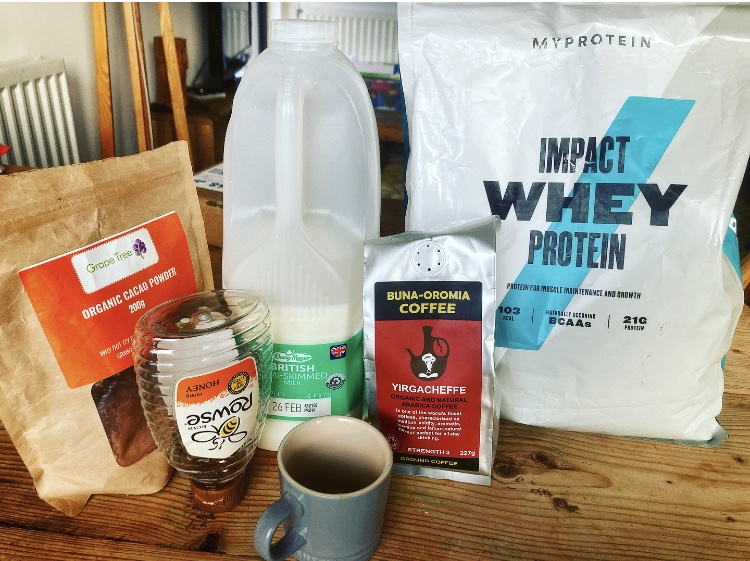
This post workout treat is a banger to get your recovery game on after a morning workout. Getting your nutrition right post workout is very important to supporting recovery. The timing of your nutrition starts to become even more important however, when you’re preforming multiple workouts in a day.
Carbohydrates
Your stored carbohydrate, known as glycogen, is the preferred and primary fuel source for maintaining repeated bouts of high intensity exercise, (think sparring, pad work, circuits & sprints).
Glycogen is stored mainly in the muscle with a small amount in the liver. Your glycogen stores can take up to 6 hours to fully replete, so getting that process started quickly is important, especially if you’re planning to train again that day.
So when planning the first post workout nutrition to take in, there’s a few things to keep in mind. Carbohydrate is king for performance and as such, it should be your priority. Not only does is fuel subsequent performance later that day, but it also supports muscle and water retention, (which contrary to some advice, is actually a very good thing when training hard!).
How much carbohydrate you consume post workout will depend on how much weight you have to loose and the intensity of your next session. This shake dosnt replace your post workout meal, but it does get the recovery session started.
Protein
Second up in your shake, some high quality protein to support the recovery process. I go for Whey as it has all the EAAs required by the body and is affordable. By all means though, and especially if vegan, check out other options on the market such as Soy.
Protein aids the body’s adaptation to exercise and recovery from it. Protein can also act, as caffeine, as an enhancer to glycogen re synthesis, in the absence of optimal carbohydrates.
Protein is often lauded as the essential ingredient post workout and although very important, probably takes second place to carbohydrate if you’re training again that day.
Getting protein into the diet is an essential for building and maintaining lean muscle mass, as well as crucial for supporting recovery from training. It can sometimes be tricky though to do this without just eating chicken breasts and chugging protein shakes.
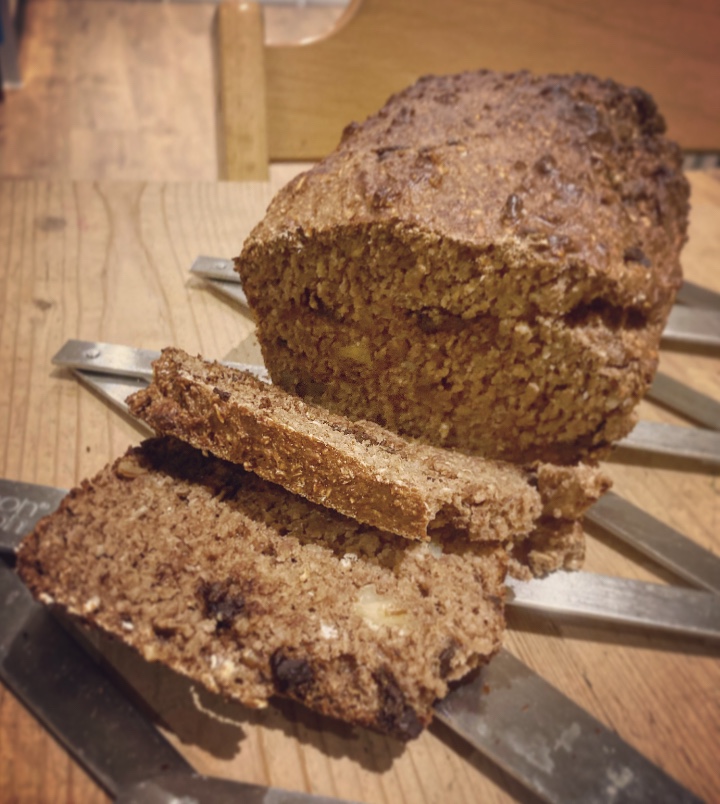
The Chocolate & Walnut Protein Loaf is a great mid morning snack with a good amount of carbs and fats to keep you going. If you want to lower the calories a little and are thinking about something to have fairly close to a workout, consider dropping the walnuts and chocolate, replacing with dried fruit such as raisins.
I’ll give you the full calories ,(kcal), and macronutrient breakdowns below. Divide 1513 by the number of slices you chop it into and you’ll have a good idea of the calories & macros for each slice. Saying this I have given you numbers per slices if you cut it into ten pieces, which depending on your loaf tin, is about right.
Ingredients:
350g oats
2 x medium bananas
50g walnut halves
50g of unflavoured whey protein powder (or protein of choice)
2 x tbsp honey
2 x tbsp cacao
2 x medium eggs
200g low fat Greek yogurt
40g of 90% dark chocolate (anything over 70% is good)
2 x tsp baking powder
Method
Preheat your oven to 175c and place grease proof paper in a loaf tin
Place oats in blender and blend till all are ground up
Place oats, protein powder, cacao & baking powder into a bowl and thoroughly stir together
Chop up the walnuts & chocolate squares roughly, then add them to the mixture
Place bananas, honey & yogurt into a blender and blend till completely smooth
Combine smooth mixture to the dry mixture in bowl and thoroughly mix together
Spoon out mixture into the the loaf tin and smooth it down with the back of a spoon
Place tin into the preheated oven for 45-60 mins
Allow 5 minutes to cool after you’ve removed from the oven
Enjoy!
Total Per slice (10 slices) Calories: 1513kcal (150kcal)
After listening to a great episode on The Fight Dietitian (TFD) Performance Podcast, all about nutrition for training in Thailand,I thought I’d write up a short summary and add my own two pennies worth.
Training in Thailand is many a Thai boxer’s dream. It’s the source of this beautiful art and home of the world’s top Muay Thai gyms. You’ll also see the highest level fights in famous arena’s such as Rajadamnern and Lumpinee Stadiums in Bangkok.
In more recent years though, Thailand has expanded its appeal to other martial artists who visit the big super gyms which cater for MMA, BJJ, wrestling and boxing, as well as Muay Thai. A huge appeal of training in Thailand is getting to live the fighter’s lifestyle in the sun and often beautiful surroundings. At the gyms it’s not uncommon to be training 5/6 hours a day split over two sessions, 6 days a week. With this kind of volume of training your body is going to suffer, so let’s look at how you can support it to try and keep up.
Hydration
This is the first essential to keep in mind. You’re training potentially for longer and in likely hotter conditions than you’re used to. Thailand is also known to be particularly humid, therefore likely increasing your sweat rate.
With this in mind, hydration is the number one basic to try and ensure you’re getting right. Firstly, don’t rely on feeling thirsty as a indicator to drink. If your feeling thirsty you’re already likely dehydrated, so stay ahead and ensure you’re regularly sipping.
Ensuring you’re getting enough water is only part of it though. When you loose significant amounts of water from the body via sweating, you also loose salts and minerals that support your muscles to function. These are called electrolytes.
Electrolytes are salts and minerals found in your blood, including sodium, calcium, potassium, chlorine, phosphate, and magnesium. Your cells use electrolytes to conduct electrical charges, which is how your muscles contract. Electrolytes also help your body to hold water so it doesn’t just pass right through.
Sodium, the main component of salt, is the electrolyte you will be in the most need of replenishment. Although most sport drinks will include a sodium element to them, as well as some carbohydrates which will also support absorption, it may be better to go with electrolyte sachets which you can bring with you or buy locally over there.
Be minded that local Thai food is often high in sodium, particularly in the sauces, so you may be digesting more sodium than you are aware of.
Ensure you’re drinking prior, during & after training. Look at the colour of your urine, shoot for clear to straw coloured as a good measure for where your hydration is at.
Eating
After ensuring you have your hydration locked in, fuelling and recovering from all that training are the next most important points. Timing of eating can be difficult if starting at the gym early, but try to ensure you’re getting some fast digesting carbohydrates into you before you hit that first session. Easy options could be bananas and a low fat yogurt for instance. If you have more time and your hunger is high, go for something more fulfilling, just don’t go to high on the fat first thing. Porridge or scrambled eggs on toast, both with a side of fruit, are good options.
Hunger can be suppressed from the heat and it can be tempting not to eat if you’re short on time and even money. Those heading to Thailand for a fight camp may also be seduced by the idea of loosing all the weight needed as quickly and easily as they can. Although all the ingredients are there for you to lean out very quickly, if you’re not properly refuelling, your performance will suffer.
Structure your meals as best you can. Try and ensure you’re getting a protein source, a fat source and probably most importantly, don’t be skimping on the carbohydrates!
Macronutrients
Carbohydrates are king for fuelling you, especially in light of the often high intensity work you’ll be doing hitting pads and sparring. If your appetite is low, look for full sugar sports drinks & fruit juices/smoothies to help replenish after training. If you’re working out over 45 minutes, which is highly likely, then intra workout carbs are also important, a full sugar sports drink is a great option here.
Protein is another important macronutrient you’ll need to keep in mind. Protein will help your muscles recover from all that taxing work you’ll be asking of them. Thai food can lack protein so you may have to double up protein options if ordering locally. Think fish, meat, eggs and dairy products as all being great sources. A typical option could be getting a side of sticky ribs with your pad Thai noodles.
If you’re vegan, really do think about investing in a high quality vegan protein powder with a high ratio of the Essential Amino Acids, (EAAs). Beans and pulses can be ok options, however they lack certain properties that your body needs to repair. They are also fibre dense, which may cause some bloating and discomfort if eating close to undertaking a training session.
Fat is a macronutrient that can be overlooked as having an important function to play in your health, especially when reducing food intake on a weight cut for instance. Fat help’s hormone production and supports absorbing other key nutrients. There is not much fat in meals in Thailand so you may need to up fat content where you can with eggs, avocado, and full fat yogurt.
Lastly, don’t forget your fruit and vegetables. There’s loads of amazing tasting fruit in Thailand, so it shouldn’t be too hard. Again, you will be asking a lot of your body and immune system, and the vitamins and minerals within fruits and veg will help you to stay strong.
Final Points
Hygiene is even more of an essential when training in Thailand. There is a lot of staff in the gyms as the heat and humidity makes for a perfect breading ground. Ensured your washing thoroughly between sessions and where possible try disinfect your gear with an antibacterial spray.
Supplements are maybe something you want to think about bringing with you for ease. A good protein powder and creatine monohydrate are good basic options. We’ve touched on protein already but if you want to know more about creatine, have a read of the following post:
Adjusting to high training volume is going to be tough early on in your stay. Where you can, try and do some heat acclimatisation before you head over, for example start to up some of your training in a sweat suit.
When you’re over in Thailand, especially if just arriving, try to acclimatise a bit to the training in the early days. Pack your sun screen, especially for the running and try to ease yourself into the training. Not doing two a day sessions for the first week may annoy your trainer but remember, it’s not a sprint, it’s a marathon!
This recipe is a return to a common theme for Nutrition 4 Fighters, breakfast muffins! These are a great high protein, medium carbohydrate and low fat option that can set you up nicely for either a great workout or the day ahead.
Ingredients
90g of oats
50g unflavoured whey protein (or plant based equivalent)
1 x medium apple
1 x medium banana
1 x cup (250ml) semi skimmed milk (or plant based alternative)
30g dark 70% plus dark chocolate
1 x tsp of ceylon cinnamon
1 x tsp of baking powder
Method
Preheat oven to 190c
Combine oats, protein powder, baking powder and cinnamon in a bowl
Blend milk and banana thoroughly
Combine oat & milk mixtures and thoughtfully mix together
Chop apple into small pieces
Roughly chop the chocolate into small pieces
Grease a muffin tray or use muffin baking cups
Place wet mixture evenly into the tray
Add pieces of chopped apple & chocolate evenly to each muffin, using a fork to press them down inside the mixture where needed
Heat in oven for 20 minutes
Remove, allow to call and serve
You’ve got one breakfast or snack meal sorted here with another you can put in the fridge for later.
Per serving (half of total mixture measures above):


 Nutrition 4 Fighters