Creatine – which kind of sporting performance it may help, how much to dose and considerations for combat and weight making athletes

Today’s short post will look at the performance enhancing effects of supplemental creatine. I’ll detail how it improves your performances and in what specific sporting contexts it’s best placed. I’ll detail a dosing strategy and lastly, touch on considerations for weight making athletes and also, how creatine can even support your brain health.

When I refer to creatine in this post I am referring specifically to creatine monohydrate. Although you will find other brand alternatives, all the research indicates creatine monohydrate will meet all your performance goals adequately. Of particular importance, it is also the most cost effective of the creatine products on the market.

Performance

Performance enhancing is a fairly generic term, so let’s define in what context creatine can actually help you perform better. Creatine can acutely enhance performance of sports that require repeated high intensity exercise. Such examples include football and other team sports, power lifting, short & middle distance running and many combat sports.

Creatine improves recovery in short recovery periods between repeated bouts of maximal exercise. It is speculated it can also act as a buffer within the muscle (from muscle acidity), therefore delaying fatigue. Research also indicates creatine leads to improvements in muscular strength, force production, (or torque) and can lead to greater gains in lean muscle mass.

Although there is some differing papers, generally research does not suggest an improvement for endurance performance from creatine supplementation.

Non meat eaters

In its natural form, creatine is found in meat, fish and poultry products. Therefore supplementing with it can be especially important for vegetarian and vegan athletes.

In fact the biggest performance benefit will be seen by those who don’t consume much creatine containing foods such meat and fish. Vegetable sources are low in comparison. Herring is highest at 0.65-1.10g per 100g with salmon & beef next highest at 0.45g per 100g.

Dosing

There is some discussion around when to best take your creatine, especially from gym bros! It seems that post workout though is the optimal timing. However, in reality creatine works only when muscle is saturated by it, therefore consistency is far more important than timing in order to get a training effect.

Here is a best practice strategy when starting creatine supplementation;

– Creatine loading phase of 20g a day split into 4 doses of 5g throughout the day, for 5 days.

– Maintenance dose of 2g daily.

– Maintenance does can increase from 3-5g but watch weight gain.

The research does not support concerns regarding long term use, so don’t feel a need to cycle off. It could also support maintaining your lean mass during off season or times of reduced training such as when injured.

Optimising

As noted, post workout seems the optimal time to consume creatine. Total muscle creatine can be increased when consumed in a solution with simple carbohydrate. Protein and carbohydrate solution also seen to enhance muscle take up via insulin stimulation.

Weight making

I have a particular interest in combat sports where reaching a predetermined competition weight is often essential for competing athletes. This though is relevant for a number weight category sports.

When consuming creatine, changes in body composition can result from an increases in intracellular water, stimulation of protein synthesis or decrease in protein breakdown. Although these ultimately have positive benefits, they bring an added layer to consider when ‘cutting weight’.

If the athlete has a minimum of six to seven weeks before competition, and a high amount of weight to loose, they can reduce their daily dosing from 5 to 2.5 g, two to three weeks out. This will ensure optimal benefit for the initial stage of camp and some additional water weight may be lost whilst a continued ,(all be it sub optimal), benefit can continued to be obtained.

If there is shorter notice and the athlete is really struggling with weight loss, stop creatine one to three weeks before the weigh in. It will take four weeks to get to base line levels but a sharp drop in creatine stores happen after just one week.

Regarding loosing weight however, the question is how much weight will cutting creatine actually result in? Potentially this could be around 1% though, which may be crucial for those with a lot to cut. One week cutting (creatine), is probably optimal in regards to cutting some excess fluid retention but not loosing performance enhancing effects.

Lastly, a consideration is using creatine post weigh in, especially when weighing in 24 hours plus, prior to competition. Such instances usually see the competing athlete loosing greater amounts of weight due to the additional time to recover.

Due to its water retention quantities, creatine should be used in the post weigh in phase if the athlete has been using it already. A combat athlete especially needs to consider the importance of fluid retention post weigh in. Try adding between 5 and 10g post weigh in in your hydration protocol. This can help cellular hydration.

Brain health

Lastly, and of significant interest to both combat athletes and those with historical family neuro disorders, there is research that champions creatine for its neurological benefits.

Creatine stores decline with age, but supplements can restore these levels and might even boost memory and intelligence in older people. Some research suggests supplemental creatine may boost memory and reasoning skills in those at risk of low creatine levels due to their diet. It also has potential to help heal from a concussion. When taken at the onset of head injury creatine can reduce the effects of the concussion.

Please let me know your thoughts with a comment! If there’s anything else you’d see to read or see, let me know.

Healthy Chocolate Chip Muffins

Another sweet treat for you today. These muffins are probably simpler to make than the ‘real’ ones. There’s a good mix of protein, unprocessed carbohydrates and healthy fats.

Give them a shot and let me know your thoughts!

Ingredients

– 2 medium bananas

– 2 large eggs

– 1 cup or peanut butter

– 2 tbsps of honey

– 3 tbsps of cacoa nibs

– 1/2 tsp of baking powder

Method

– Pre heat oven to 175c

– Simply blend all ingredients together, ensuring bananas are completely blended.

– Either grease muffin tray or put in cases

– Fill trays between 1/2 and 3/4 for each muffin

– Allow to cook for 12-15 minutes

– Remove from oven and let muffins stand for 5 minutes 👌

Energy density: 199kcal each muffin (12 muffins)

Chocolate Protein Fridge Cake

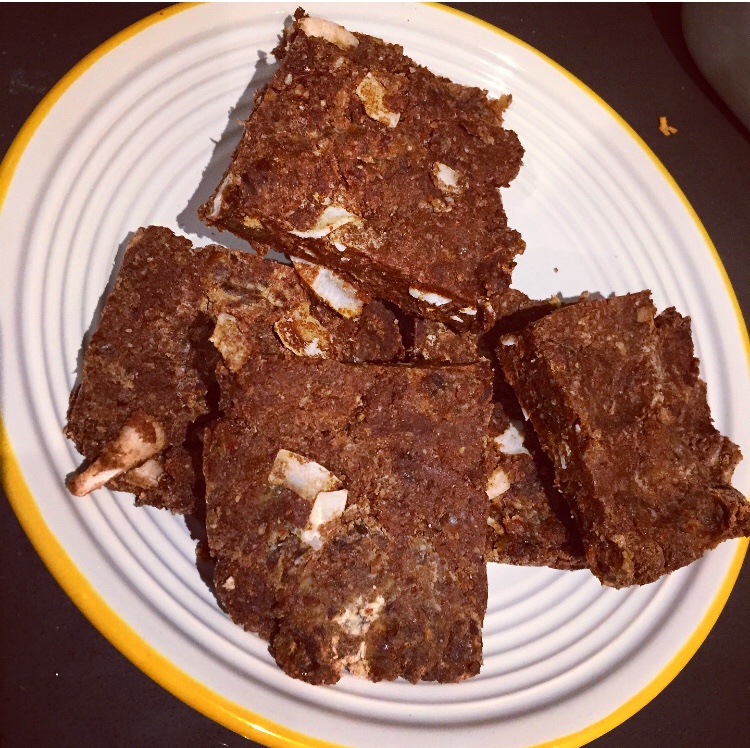
This little treat is a favourite of mine to have in the fridge. It’s a great post workout snack as is a good source of easily digestible carbs via the dates, as well as a great source of protein. The good protein content also makes it super satiating, so not a bad mid morning/late afternoon snack with a cup of your finest choice hot beverage.

The Standouts

A couple of ingredients standout. The unsweetened cocoa powder is a good source magnesium (which can help reduce stress), potassium, and iron. Additional to this, it’s also full of flavonoids. These are nutrients that display antioxidant, anti-inflammatory and antiallergic properties. The flavanols in cocoa are thought to improve nitric oxide levels in the blood, which can enhance the function of your blood vessels and reduce blood pressure

Almonds are a good source of Vitamin E. Vitamin E is a fat-soluble, essential nutrient with anti-inflammatory properties. Vitamin E helps support the immune system, cell function, and skin health. It’s an antioxidant, making it effective at combating the effects of free radicals produced by the metabolism of food and toxins in the environment.

Lastly, protein. Protein is important for pretty much every function within your body. It’s far more than just muscle building that it’s important for, (although that’s pretty damn important, especially as you get older). Whey protein is a great source as it contains all the 9 essential amino acids, which the body can’t synthesise by itself.

Ingredients:

– 227g dates

– 80g ground almond

– 40g Cacao powder

– 80g Greek Yogurt

– 2tbsp coconut oil

– 40g/ 2 scoops of whey protein

– 2 tbsp of toasted unsweetened coconut flacks

Method:

– Melt The coconut oil and set aside.

– Place The ground almonds, cacao and melted coconut oil in blender. Blend contents, scraping down the sides if needed.

– Place blended contents in bowel and add the other ingredients, mixing thoroughly.

– Grease a backing tin and pack in The mixture, pressing into place firmly using a rolling pin or back of a large spoon/spatula.

– Place in The fridge for 1 hour, remove and cut into squares.

Calories

Dates – 600kcal

Almonds – 462kcal

Cacao – 160kcal

Yogurt (full fat) – 113kcal

Coconut oil – 234kcal

Whey protein- 160kcal

Coconut flakes 60kcal

Total: 1789kcal

9 slices = 199kcal per slice

Roasted Power Porridge

So here’s a recipe to give one of the world’s favourite breakfasts a little lift. You can get as creative as you want with your porridge but I like to add a minimum of these two staple additions; blueberries & plain Greek yogurt. The beauty of this porridge however, comes from the toasted flavour of the oats, a simple but super tasty way to cook them.

The Staples

Blueberries are a great source of vitamins and minerals such vitamin C, K and manganese. These can all play roles in immune function and bone development.

Greek yogurt is a staple as although porridge isn’t a bad source of protein, it’s doesn’t contain all 9 essential amino acids needed for your body needs to regenerate, repair and build. Greek yogurt contains leucine, a branch chain amino acid that’s optimal for muscle protein synthesis.

Lastly, I’m a huge fan of Ceylon cinnamon, primarily as I love the taste. However, it does have some reportedly impressive benefits on balancing blood sugars amongst other things. Have a read hear if you want to know more:https://nutrition4fighters.wordpress.com/2017/11/16/snack-hack-13-ceylon-cinnamon/ . A little pro tip for the British readers is to hit up your local Lidle who sell Ceylon as their standard product. It’s the cheapest spot I’ve found for it by far!

Ingredients:

– 1/2 to 1 full mug of oats (depending on how much exercise you planned that day)

– 1/2 a cup of milk

– 1/2 a cup of water

– Pinch or sea salt

– 1/2 a cup of blueberries (I tend to use frozen)

– 1 to 2 large tsps of (full or half fat) Greek yogurt

– tsp of Ceylon cinnamon

Method:

– Place oats in saucepan and gently heat them dry. Stir for around 4/5 minutes or until you start to smell a toasted aroma.

– Add the water, milk and sea salt, mixing thoroughly. If frozen, also add blueberries at this point.

– After continuing to stir 5 minutes, ensure the oats have fully absorbed the liquid (or at least to your desired consistency). Remove from heat and add blueberries if fresh.

– Empty oats into the bowel. Add another splay of milk if you desire. Add the Greek yogurt and sprinkle the Ceylon cinnamon.

Calorie Options

Heavier option:

1 cup of oats – 389kcal

1/2 cup full fat milk – 75kcal

1/2 cup blueberries – 43kcal

2 tbsp full fat Greek yogurt – 30kcal

Total 536kcal

Lighter option:

1/2 cup of oats – 195kcal

1/2 cup of semi skimmed milk – 58 kcal

1/2 cup blueberries – 43kcal

1 tbsp of 2% fat Greek yogurt – 11 kcal

Total 306kcal