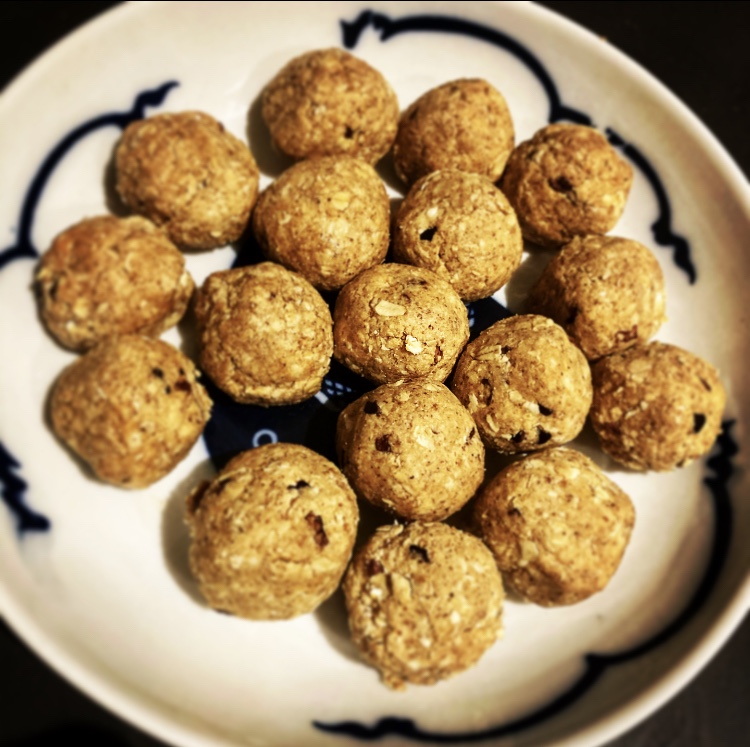
Healthy Cookie Dough Bites

These little balls of delight are a great little energy providing snack. They have a decent balance of carbs, fats and protein.

I’ve used almond butter but peanut butter would probably work equally as good.


Ingredients:

  • 150g almond butter
  • 50ml honey 
  • 100g oats blended
  • 30g protein 
  • 2 tbsp Cacao nibs

Method:

  • Blend the oats
  • Combine oats and almond butter in a bowel and mix thoroughly
  • Add honey and cacao nibs and mix again
  • Take small handfuls and roll into balls
  • Place balls in fridge for 30mins
  • Enjoy

Creamy Tomato Recovery Curry

This curry doubles as a pretty damn amazing evening treat whilst also being a recovery day special. It’s loaded with anti inflammatory spices such as ginger, turmeric and cumin to support mopping up some of that damage caused by heavy training and the rigours of life.

Red meats such as beef steak are also a good source of iron. There are two kinds of iron, heme and non heme iron. Heme iron is from animals and non heme is from plants. Heme iron is far better absorbed by the body than non heme, which is especially important to be aware of if you’re a vegetarian of vegan.


Low iron levels may be the reason behind low energy levels and poor recovery. Your body uses iron to make hemoglobin, a protein in red blood cells that carries oxygen from the lungs to all parts of the body. It’s also helps make myoglobin, a protein that provides oxygen to muscles.


Both low iron levels and high levels of inflammation in the body can be detrimental to recovery and hinder making progress towards fitness and health based goals.

Ingredients:

(Serves 2/3 people)

  • 225g Sirloin Steak chopped up
  • 1 medium diced onion
  • 4 cloves of garlic minced/finely chopped
  • 1 red sweet pepper roughly chopped
  • Handful of halved cherry tomatoes
  • 2 tbsp of ground ginger
  • 1 tbsp of cumin
  • 1 tbsp of turmeric
  • 2 tbsp of chopped coriander (one chopped finely, the other roughly chopped)
  • 1 tin of chopped tomatoes
  • 1/2 tin of coconut milk
  • 1 tsp of sea salt
  • 1 tsp of cracked black pepper
  • 2 tbsp of coconut oil

Method:

  1. Add both tbsp of coconut oil to a large pan or wok, and melt on a low heat. Once melted, add the spices, finely chopped coriander, salt & pepper and mix into a paste.
  2. Add onions and lightly cook until translucent. Now add meat and garlic. Continue to cook on low heat until the beef is browned on the surface.
  3. Add chopped tomatoes, stir and cook the meat on a low heat for roughly 2/3 minutes.
  4. Add coconut cream and roughly chopped coriander, cherry tomatoes and the sweet pepper.
  5. Cover the curry and allow to simmer on low heat for 15/20 minutes.

Serve with either rice or if watching your calories, cauliflower rice or just as it is in a bowel.

How much Protein does an Athlete need? – 2 minute read

Welcome back! Today’s post is looking at how athletes can best calculate their protein intake to both repair and build muscle. This process is called Muscle Protein Synthesis, (MPS).

Although your intake of protein is essential to fully maximise muscle growth, there are other important factors to consider. Firstly and most importantly, although you may well preserve your current muscle mass with the right intake of protein, don’t expect to add to it without doing the required training!

You won’t stimulate new muscle growth without a stimulus. The primary stimulus is of course resistance exercise. Even for athletes who don’t wish to build excessive hypertrophy, (‘bulk’), having a better muscle to fat ratio is a far preferable situation for everything from sport performance to injury prevention.

Protein Quality

The quality of your protein is important even though many foods will contain some proportion of protein within them. However, to build muscle you need to have food sources that contain the 9 Essential Amino Acids, (EAAs), that your body can’t produce by itself. In particular, food sources that contain a high concentration of the branch chain amino acid, (BCAA), leucine have been seen to achieve the best results.

Food choices that include the 9 EAAs and are high in leucine include;

  • Poultry
  • Fish
  • Beef
  • Pork
  • Whey protein
  • Dairy products

Meal Planning
Ok, so now you know the why and the what, here’s the how. So this is the basic strategy to figure out how you can calculate how much protein containing foods to include in your meals. If we break it down MPS is maximally stimulated at 0.3g of protein per kg of body weight, (bw), per meal.

An ideal strategy is to include four feeding portions of 0.3g/kg bw and one of 0.6g/kg bw before you go to bed. A pre bed higher dose of protein may be needed due to the duration you are sleeping without any nutritional input. Athletes should be sleeping a minimum of 8 hours with a dose of 0.6g/kg bw leading to a favourable increase in MPS during that rest time.

So for example, a 70kg athlete may take a serving of 0.3g of protein per meal for 4 separate servings but then for their 5th serving before bed, take 0.6g of protein. This would equate to them ingesting 1.8g of protein per kg of body weight per day.


Older Athletes

A greater intake of protein may well be essential for older athletes. This is particularly for over 50s when a process called anabolic resistance begins to set in. This makes muscle less sensitive to protein intake. Therefore older athletes should shoot for 0.4g/kg of bw to maximise MPS.

Although not quite so important for recreational athletes and indeed recreational drinkers, but be mindful that alcohol has been seen to inhibit MPS. Therefore if gaining size is your goal, limit the boozing as much as you can.

Further Considerations

Quite a lot has been made about meal timing and especially protein timing. Minimal evidence exists however that protein timing is essential for muscle growth.

After exercise the muscle is sensitised to protein intake for up to 72 hours. While it may do no harm and even have some benefits such as muscle soreness management, it is not essential for muscle growth.

However, at the elite end of sport, the 1%s can make the difference. There is good evidence that 4 doses of 20g of whey protein was mildly superior to one bolus dose of 80g. It is also clearly an easier option to digest!

Thanks for reading, please hit me up with any questions or queries!

Spicy Protein Pancakes


Write, today’s recipe is a banger of a post gym session or recovery day treat. They can be cooked up, allowed to cool and taken as a post training snack or even better, served fresh and eaten any time of day or night!

The spice of your choosing is a particularly nice addition with a personal fave being nutmeg. Also, I’ve proposed using Whey protein. Whey protein has been proven to be the best choice for muscle protein synthesis, due in part to its high leucine content. However, do just use your protein powder of choice.


Ingredients:

  • 2 large eggs
  • 1/4 cup of whole oats
  • 1 medium banana 
  • 1 scoop of protein powder
  • 1 tbsp of Greek yogurt 
  • 1/2 tsp of baking powder
  • 1 tsp of either nutmeg/cinnamon/ginger

Method: 

  • Combine all ingredients in the blender and blend until smooth
  • On a low to medium heat, melted a small amount of oil in frying pan
  • Place palm sized portion of mixture into the pan. Allow to cook until bubbles start come fully through the mixture, (around 2/3 minutes)
  • Flip and and heat other side for around a minute
  • Serve and enjoy!