Blog

What the experts say – the 2 minute read – Food Choices to Make You Healthier

Welcome back to the ‘what the experts say’ series. These short two minute reads bring you two, three or four easy to implement tips via some of the leading lights in the health and wellness space.

Ok ok, I get it, another ‘healthy foods’ post. Maybe I should just post up a picture of broccoli and a kale chip and be done with it. Well, this one be a tad different, I swear.

Today’s tips are a couple of little known choices to improve health, longevity and even, managing a hangover! So hold onto your hats for a mighty informative two minute read of what the experts say

Right, so first hot tip is bought via the primal movement founder, Mr Mark Sisson. This tip is particularly good for those following a low carbohydrate or paleo/primal style eating plan.

Resistant starches are a good form of prebiotic, feeding the healthy microbes in our gut that aid digestion, immune function and even mental health. Raw potato starch & green bananas are both good sources for resistant starch.

Another good form of resistant starch is cooled white rice and cooled white potatoes. They are good also as the molecular structure of the carbohydrates they contain becomes indigestible as they cool and forms as the resistant starch.

To double the potency of these forms, try reheating & re-cooling for the potatoes. Be warned though, don’t heat starch or green bananas, as this will make the starches become digestible carbohydrates, and as such, spike your insulin.

Next tip is via Greg Potter, a researcher and guest of the biohacker podcast. To aid with weight loss, try to increase your brown fact activation. Aside from cold showers, look to get spicy. The Capsaicin in red pepper is the perfect enabler to activate that there brown fat.

Number three tip. This ones bought via the clever minds at Caveman Coffee. We’ve all heard of the health properties that are now being linked to coffee, but, there seems to be a trade off. When choosing, look for a lighter roast coffee for being higher in caffeine but a darker roast for having a higher antioxidant count.

Lastly, but by no means least.. (and of course as promised!) Onnit head honcho Aubrey Marcus recommends a green tea for a hangover. The l theanine content of green tea mimics the neurotransmitter GABA, which boosts mood and can have a calming, relaxing effect.

Alcohol consumption produces more GABA, which results in the brain over producing the neurotransmitter glutamate to compensate come the morning once your GABA stores are depleted. This over production of glutamate can lead to headaches, feeling grouchy and not at your finest.

Alright, so hope you enjoyed this post and learned a little something. Till next time!

The Vitamin Breakdown! – Vitamin B8

Well, this one has been a long time coming, welcome back to the vitamin break down series! It’s been a while since I’ve updated this series. These posts seek to explore the different vitamins, look why you need them and tell you where to get them.

So, today’s breakdown is a tad controversial, (in a very none controversial way), as we’ll be looking at vitamin B8. As it stands, B8 isn’t really known or considered as a true vitamin anymore. It is the former designation given to several distinct chemical compounds: Adenosine Monophosphate (AMP) and Inositol. Inositol however is how I’ve seen it referred to in the majority of the research I completed for this post.

Inositol is a type of sugar. Inositol can be found in many forms (called isomers). The most common forms are myo-inositol and D-chiro-inositol.While you likely need some inositol every day to maintain your health, its functions in your body are not as thoroughly investigated as those of other vitamins.

Inositol is found in many plants and animals. It is also produced in the human body and can be made in a laboratory. It is made inside the body by intestinal bacteria. Our body can make its own inositol from glucose with the help of intestinal bacteria. Hence, external sources are of help only in conditions when the body is incapable of making its own vitamin.

Such as it’s B vitamin brethren, it’s a water soluble vitamin. As it is a water-soluble vitamin, it is not stored from external sources in the body and excess ingested amounts of it are flushed out with urine.

Although B8 is required in very small amounts by the body, it’s important to ensure it’s still obtained daily through the diet. Don’t get too anxious though, followed by vitamin B3 (niacin), our body has the second highest store of inositol, likely owed to the fact it can produce it so easily.

Cellular Communication

One major function of B8 is aiding in cell communication. Cells interact with each other via chemical signals – one cell releases a signalling molecule, such as a hormone, and then another cell receives and interprets that chemical message. Inositol helps your cells to interpret the chemical messages they receive so they can react accordingly, for example, helping your cells divide when they receive chemical signals telling them to grow. Defects in inositol signalling cause a breakdown in cell communication, and these defects are linked to diseases such as cancer.

Metabolism

Vitamin B8 has many other important functions to its credit. It is required for the metabolism of carbohydrates, fats and proteins for the production of glucose. It is involved in the uptake and utilisation of glucose by the cells hence converting it to energy.

Not only does inositol, as a form of glucose, enhance the performance of cells as part of the membrane that surrounds all cells, it also helps in the processing of fat in our liver while keeping our muscles and nerves working properly.

B8 also acts as a mild lipotropic agent in the body meaning it can help to accelerate the breakdown of fat during metabolism. This has been seen in particular in overweight and obese individuals.

Immune & Nervous Systems

Inositol is required for maintaining a healthy immune system, thereby protecting the body against infection. Various research and clinical trials have suggested that inositol is necessary for the normal growth and survival of the human body. B8 keeps blood pressure in check, through its promotion of effective blood flow via the arteries.

Inositol is very important for the appropriate functioning of the nervous system.Its supplementation provides relief to patients suffering from multiple sclerosis. It plays an active role in maintaining the healthy functioning of the nervous system in diabetic individuals. This can be seen by how it provides relief to diabetic nephropathy patients suffering from pain and numbness in the hands and legs.

Mental Health & Hormones

Vitamin B8 might also help maintain your mental health whilst improving cognition. Brain cells have inositol in their cell membranes, and getting enough inositol helps your nerves respond properly to neurotransmitters, the chemicals your brain cells use for communication. It might also help the hormone insulin to work better, which goes back to B8’s supporting role in metabolism.

B8 has also shown potential for treating a host psychological disorders. What makes it effective in treating psychological conditions such as depression, bipolar disorder, Alzheimer’s disease, and a number of other conditions, is its ability to influence how much serotonin is available to be supplied to nerves in the brain. However, there is limited scientific evidence to support insostol’s uses for these conditions

Gynaecological

Vitamin B8 seems to help reduce the symptoms of polycystic ovary syndrome, or PCOS, a hormonal disorder that causes weight gain, irregular periods, infertility and diabetes.

It is also taken to prevent complications during pregnancy such as neural tube birth defects (birth defects that involve the brain and spinal cord) and for preventing the side effects of a drug called lithium.

B8 might also help relieve severe pre-menstrual syndrome, according to the NYU Langone Medical Center. Taking inositol under a doctor’s orders might also help treat metabolic syndrome linked to the syndrome as it lowers the high blood pressure and cholesterol.

Food Sources of Vitamin B8

Deficiency of vitamin B8 is unlikely. However, a word of caution for coffee lovers, excessive coffee can deplete the vitamin stores.

B8 is found in several healthy foods. Sources of vitamin B8 consist of the following:

▪ nuts

▪ whole grains

▪ egg yolk

▪ legumes

▪ banana

▪ yeast

▪ mushroom

▪ sardines

▪ cauliflower

▪ swiss chard

Other sources include the following:

▪ lecithin

▪ liver

▪ wheat germ

▪ raisins

▪ peanuts

▪ cabbage

▪ all citrus fruits except lemons

▪ cantaloupe

▪ lima beans

Alrighty, hope that this post has given you a little insight into another vitamin on the vitamin alphabet, even if this one is hanging around on the vitamin status peripheries. Please like, share and comment if this was of any help whatsoever! Till next time.


Dr Mike T. Nelson’s Carbohydrate Cycling & Exercise Plan for Health, Fitness & Wellbeing

Alrighty, welcome back to the What Supp Blog. As standard, prepare yourself for some information gold nuggets to help supercharge your overall performance.

Today’s post is bought via the wisdom of Dr Mike T Nelson. Dr Mike has a PhD in Exercise Physiology, a BA in Natural Science, and an MS in Biomechanics. He’s an adjunct professor and a member of the American College of Sports Medicine.

Dr Mike presented a pretty good looking program on a recent podcast. This program is a basic template to look at how you can amp up your fitness, body composition and general health goals. He discussed how results can be achieved by having an exercise routine that cycles carbohydrates in and out the diet alongside fasting.

The nutrition component, where we’ll discuss carb cycling, is in order to promote the much heralded ‘metabolic flexibility’. This essentially means promoting your body’s ability to access both fat and glucose for fuel. Carb restriction can also promote ketone production, both an energy source and serious neuro protector. Lastly we have the fasting element, great for everything from weight loss to gut health, to cellular functioning.

So, the programme. For three days a week, let’s purpose Monday/Wednesday/Friday, you will lift heavy weights, (check part 3 of my strength post for some unique body weight exercises and the MSP heavyweight protocol: http://whatsuppblogblog.com/2017/12/27/strength-training-why-what-and-what-next-to-achieve-your-goals-part-3/ )

On these 3 days you ensure you eat up to 200 grams of carbohydrates. Although Mike wasn’t specific on timing to best ingest your carbs, I’m going to go out on a limb and suggest these are predominantly back loaded post exercise with a small amount included in your first meal of the day. If you miss a workout though or aren’t working at intensity, drop the number of carbs accordingly.

200g is the amount of carbohydrates Mike calculates is needed for an average athletic build male with some muscle, although maybe less are required, especially for women. This can be better calculated by the individual, starting at 200g and playing up or down depending on individual size and your body composition goals, (ie go down for greater weight loss/up for maintaining a higher muscle mass).

Next we have a little look at those in-between days Tuesday and Thursday. On these two days look to complete low intensity cardio. This should ideally be done in a fasted state first thing in the morning for the absolute best results. Again, going out on a limb. I’d suggest nose breathing jogging, cycling, swimming or other low impact exercise.

The carb total on these days should be 100 to 120 grams on each day. This is below metabolic no mans land, which is not enough to fuel you with glucose but too much for any ketone production. Once fat adapted, this should be enough to support the production of ketones in fitter individuals.

Protein consumption should be around 0.7 g per pound of body weight on any day, (excess protein does not equate to excess muscle building).

Fat consumption should be at 50/70g per day although Nelson notes the athlete should start at the lower end (around 50g) and add to it. I’d suggest the best indicators would be if body composition or being satiated and energy levels on lower carb days, are effected negatively.

If considering upping the fat quantity in the plan, ask what food would be added if you could add anything, is it fat or carb based? Now adjust the ratios accordingly. This can result in better compliance.

On the days where you are not training hard, fasting should be implemented. 12 – 14 hour overnight fasts should be undertaken depending on when they got done training or ate your last meal. Again, adjust accordingly to fit your lifestyle. Once you are comfortable with the fasting protocol, start to lengthen out the fasts. Mike highlights you could even work up to the Tuesday/ Thursday being fully fasted days or up to 19 to 24 hours.

I hope this has given you some idea how to implement an exercise programme which includes a weight management system, metabolic flexibility and the much heralded benefits of fasting. Should you have any questions, please drop me a comment! Till next time.

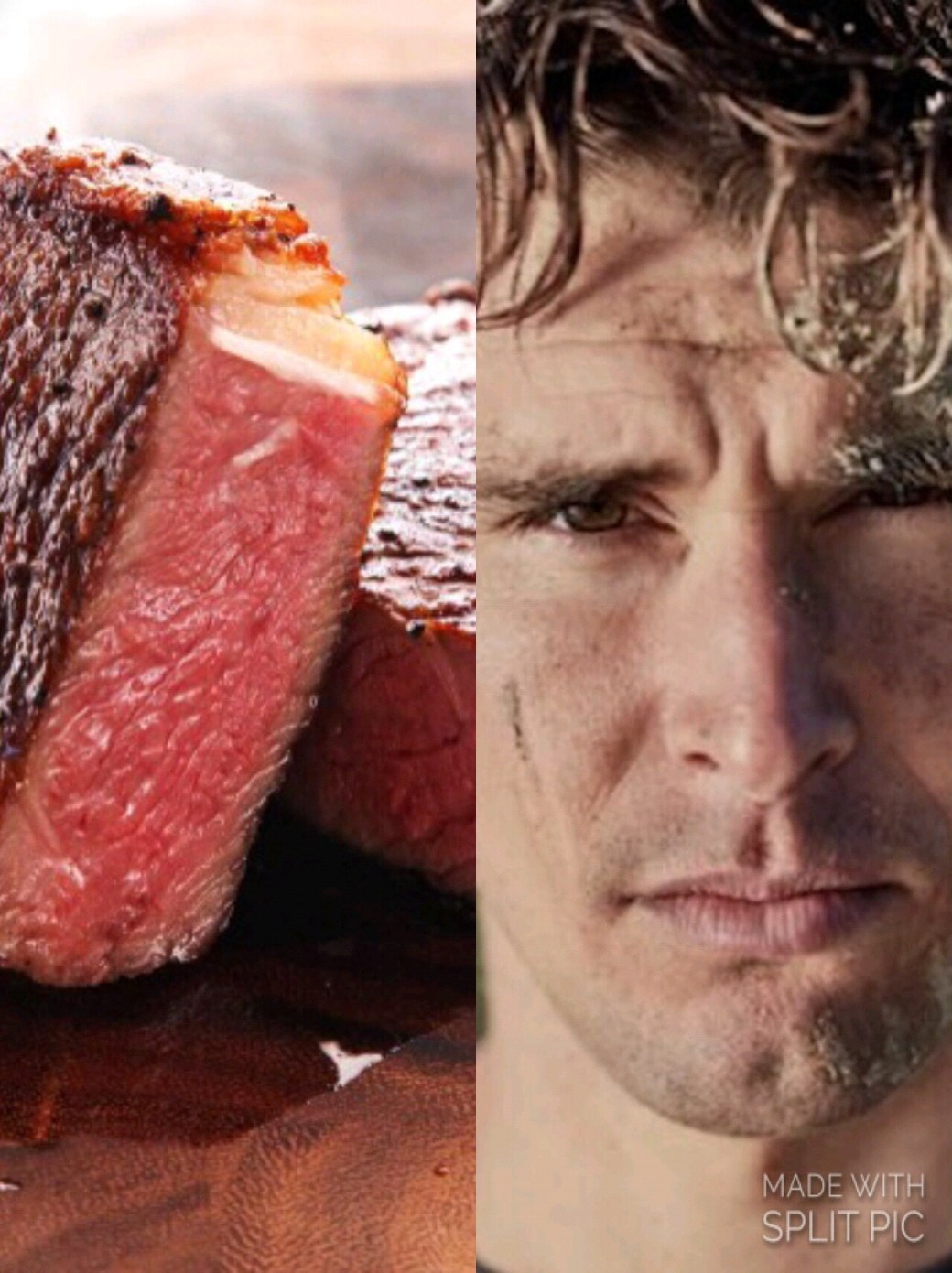
Ben Greenfield’s Recipe for Cooking the Perfect Steak

Alrighty, got a a bit of a different one for you today. Ben Greenfield is a pretty smart cookie. He’s released a number of books around triathlon training, low carb training and even how to raise tiny superhumans. He has an awesome podcast with many a biohack and is consistently at the cutting edge of wholistic human optimisation.

This short post will give you Ben’s recipe for how to cook the perfect steak that he gave on Joe Rogan’s JRE podcast. And actually, it’s a pretty damn good one. So below I’ll break it down step by step..

1. Remove steak from fridge/freezer. Allow it to reach room temperature for about 45/60 minutes.

2. During this time, pre coat the steak by rubbing in a liberal amount of a decent sea salt. Then add cayenne pepper, if using pepper corns, roast them first. Lastly add rosemary, again liberally. Rosemary is best for steak’s flavour but is also reduces the cargonagins that are caused from cooked charred meat. If no rosemary available, you can use thyme, (also anti carcinogenic). Coat and press both sides.

3. Pre heat cast iron skillet in the oven for 5/10 minutes. Once heated to touch, take the skillet out and put on a medium to high heat on the hob. Coat pan with a very good extra virgin olive oil (try a bold flavour choice) for a maximum 2 minutes.

4. The skillet needs to be heated enough so the steak will sizzle when it hits. This allows it to crust on outside but not cook to much on inside. Cook for 3.5 minutes on each side for medium rare.

5. Place your oven on broiler heat (or the grill for everyone else not in the US). Now place the cast iron skillet in oven under broiler/grill and allow the steak to cook 1 minuet each side.

6. Take out the skillet from the oven and remove steak. Put a generous slab of grass fed butter in skillet and let it become liquid but don’t let it burn.

7. Place steak back in skillet with melted butter and cook for 1 more minute each side under grill and remove. Poor juices and melted butter over when serving and enjoy!