The Post Workout Hydration Drink – a quick & easy recipe

Today’s post is for optimising your post workout rehydration. Rehydration after exercise is just as important as hydration prior. It’s critical for your recovery and performance, whether that be performance in cracking on with your day or performance for your next planned workout.

You can start to experience a performance dip at just 2% dehydration. Relying on your thirst mechanism certainly won’t optimise the simplest but yet arguably most important performance enhancer – being hydrated. That’s why it’s important to ensure you continue to sip water both prior and during exercise.

In planning for your hydration strategy, an important thing to be mindful of is it’s not just getting liquid into your body, it’s how you ensure your body holds on to that liquid. This is especially important if your training early and have to get on with a busy day, or training late and about to embark on complete fasting period or 7 plus odd hours (aka – sleep!).

So without further ado, this is a simple but effective recipe you can make up after any workout.

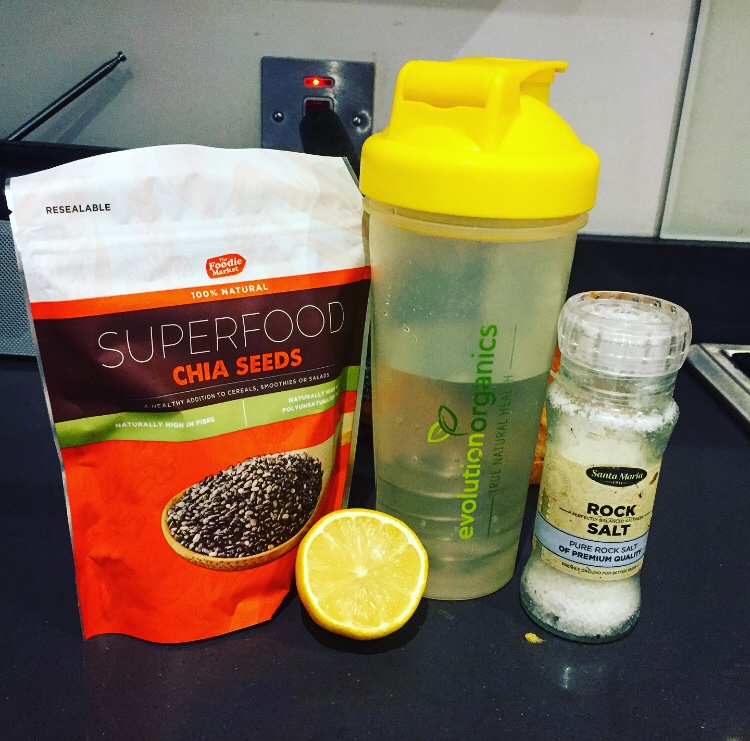
Ingredients:

1. 400ml filtered water

2. 0.5 tsp of Sea / Himalayan pink salt

Salt is essential for replacing the electrolytes sodium and chloride that can get lost through sweating it out during a hard session. Electrolytes are the minerals your body needs for many basic functions.

Adding a small amount of a quality salt source is both essential for post training as well as post sleep.

3. 2 tsp of Chia seeds

Chia seeds can help to absorb liquid. They are also a source of electrolytes calcium and potassium. In adding them to the mix you’re further supporting your muscles to function. This is achieved whilst also supporting to keep precious water in and not just letting it pass straight through by way of urine.

4. 1 tbsp Lemon juice

Lemon juice is great to aid digestion and prepare your gut for the meal you’re going to replenish it with later.

5. 1 tsp of Honey

Ok, this one is optional. I would base it on the severity of the workout rather than taste. If you’ve been out of breath and raised a good sweat, that’s a fairly good indicator.

Honey has a high glycemic load meaning it will hit the blood stream fast and be transported to the liver and muscles, where it will be stored as fuel (glycogen) which you can access at a later point.

Chocolate & Peanut Cupcakes

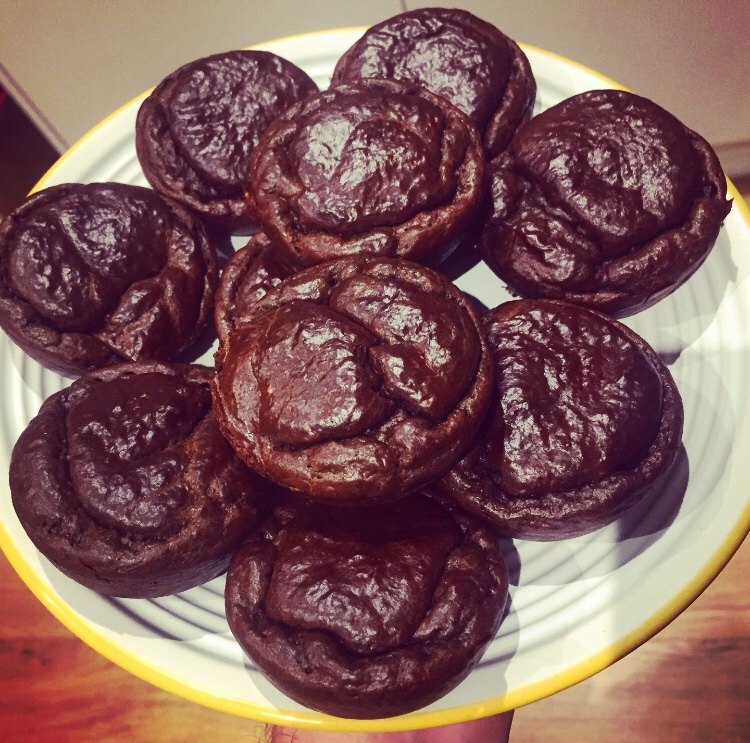
Welcome back to the super tasty and affordable recipe series! Today’s little gem is another grain and sugar free sweet treat.

I do have to add that to avoid hidden calories, as well as to ensure some of the micro nutrient quantities, please do spend the little extra and get proper cocoa powder rather than the sugary cheaper alternatives.

Ingredients:

– 2/3’s a cup of peanut butter

– 1 medium banana

– 1 & 1/2 tbsps of coconut cream

– 2 heaped tbsps of cocoa powder

– 1 large egg

– 1/2 tsp of bicarbonate of soda

Method:

– Pre-heat oven to 180 degrees

– Combine all ingredients in the blender, blending on low setting until an even consistency

– Fill cup cake tray to between half and two thirds for each cake

– Place in oven for between 12-15 minutes

– Allow to stand for 5 minutes and 👌

Cheat Meal Chips

Everyone loves a little cheat meal here and there, straying away from the optimum healthy choices to indulge the taste buds. Today’s post though gives you a healthy version of the cheat day special – chips, (aka fries for our American cousins!).

These super tasty chips are not just a carb heavy cheat meal special, they’re also ideal for fuelling or refuelling for heavy training sessions that require an anaerobic (all out) sustained effort.

Try pairing with recipe for the perfect steak from Ben Greenfield; https://nutrition4fighters.wordpress.com/2018/11/24/ben-greenfields-recipe-for-cooking-the-perfect-steak/

Ingredients:

– 1 large Desiree potato (it does make a difference)

– Tbsp of extra virgin olive oil

– 1 1/2 tsp of paprika

– Salt & pepper

Method:

– Peal potatoes & half

– Place in boiling water and blanch for 3/4 mins

– Remove and slice potatoes into thick fingers

– Place in greased pan. Add extra virgin olive oil & paprika. Mix and coat the chips evenly.

– Place in pr-heated oven at 200 degrees for 20 minutes, removing and stirring the chips at around 10 minutes.

– Remove and allow to cool for 5 minutes before serving

👌

Protein Pacing – a dietary strategy in 2 minutes

Today’s post is looking at a dietary strategy which is especially good for athletes and also a positive method to support longevity in general. Protein pacing as a strategy was introduced to me via the great mind of Prof Paul Arciero, courtesy of the equally great ‘We Do Science’ podcast, (episode 102).

Protein pacing is a dietary concept that allows for maximal protein synthesis, (MPS), throughout the day. MPS is essentially the turnover and production, or recovery and growth, of everything in your body from eyeballs, brain neurones to of course, muscle mass.

In summary, it’s about making sure that each meal, or ‘feeding’, consists of a high quality source of leucine containing protein. Leucine, an essential amino acid, is one of the primary drivers MPS. This is primarily found in animal and dairy but can also be found within plant based sources.

Ensure all feedings are centred around hitting the sweet spot of 20/40g of protein. This is not to take away from ensuring your other macro and micro nutrients are neglected, but just be mindful of how many calories you’re having within each meal.

Although a balanced diet is required to meet all the body’s needs, protein is the most satisfying and satiating of the macronutrients, another great reason it’s important for athletes and others who have weight loss goals in mind.

Try the below strategy;

– Ensure you have your first feeding of protein within 1 hour of waking up

– Ensure you’re having a feeding every 3 hours

– Last feeding of protein should be within 2 hours of bedtime

– Each feeding to be around 20/40g portion of protein, or roughly 0.25g protein per kg of body weight.

– Look at protein sources that contain leucine such as chicken, beef, pork, fish (tuna), tofu, canned beans, milk, cheese, squash seeds, and eggs

– Use a protein supplement to ensure compliance and ease of ensuring you’re meeting the protein threshold each feeding

– Any supplements need to be a high quality protein, preferably containing all the 9 essential amino acids – whey protein is ideal and cost effective

There you have it. Fairly basic but simple to put in place and achieve. Any questions, drop me a message or comment.