
Natural Energy Bars – A Healthy Choice?

Welcome back to the What Supp Blog, where we explore all things nutrition and performance related! Today’s post is a an insight into some of those sweet treat indulgences that are promoted as “healthy options”.

Now first and foremost, a brief disclaimer. I absolutely love to indulge in pretty much everyone one of these treats. From a nutritional standpoint I often think ‘right or wrong’ choices is not always a good way to look at it. As is often the way, it’s not that black and white.

Choices

Many of the bars I highlight below, in terms of choices, are far better options than your regular chocy bar. That’s if you are wanting to indulge your sweet tooth of course. Most are cold pressed, with “all natural” ingredients and no added vegetable oils or highly processed sugars and syrups . These are all a bonuses of course, and again, make them a better choice than a Snickers.

Most of these bars are simple, devoid of preservatives and in relative terms, won’t spike your blood sugars to the same degree as many a high sugar laden treat. Or will they. For those that don’t know, the continual raising of blood sugars, or glucose, is what can cause weight gain, metabolic disfunction and disease.

Metabolising Sugar

In a nut shell, you breakdown carbohydrates (essentially sugars & starches), and to a degree protein, into glucose which causes the release of the hormone insulin. Insulin carries the glucose around your body to the hungry cells for energy. When each cell is full, the remainder gets stored as fat. This is of course a natural bodily function. Where things go wrong is the excessive over spiking of insulin on a continual, multiple times a day basis. This can lead to your cells becoming insulin resistant at worse, and at best, foggy head, mood swings and a build up of inflammation in the body.

Now it’s beyond the scope of this post to give a full detailed description of all the what’s and why’s of excessive insulin spikes, but needless to say most will agree that excessive sugar ain’t doing nothing for nobody.

All Sugar Equal?

Again, and I can’t emphasise this enough, on the spectrum of good choice/bad choice, many of these paleo/vegan/gluten free bars rank a flip of a lot closer to good than a Twicks. But, know what you’re eating. Whether it’s organic coconut palm sugar, white processed table sugar, honey or even a high glycemic fruit like a date, it’s all the same (or very similar) to your body – sugar.

Don’t get too bogged down either with fructose (fruit sugar that is also isolated and manufactured in many products), sucrose (table sugar) or glucose, (blood sugar). They all have a detrimental impact. Glucose will raise blood glucose levels most rapidly of all the sugars and therefore increase insulin secretion. Whereas fructose will have the least effect on glucose and insulin, but it will raise triglycerides levels, (basically fat in your blood stream). This can actually be far nastier, leading to cardiovascular disease and weight gain. Sucrose will break down to glucose in the body and many products will have combinations of these sugars.

Snack Time

Here’s a list of some of the sweet treats options that are open to you. I have scoured the supermarkets of the UK and the least processed, closest to healthy options appear to come from Nakd, Primal Pantry, Planet Organic and some dark chocolate brands. There are obviously others but these appear to be the most readily available.

I’ve basically included dark chocolate as when the nutritional content is considered, it actually has a far greater claim on being a healthy energy bar than many other options out there. For more on why dark chocolate, have a read of this previous post about human’s real best friend; http://whatsuppblogblog.com/2017/03/05/chocolate-a-superfood/

Soo, just quickly before we look at that indulgent lil afternoon snack list, here’s a quick note on the side. I have not included any bars which contain oats. Oats have a high carbohydrate content and many of the options on the market that I checked included the likes of rice bran syrup, apple/grape concentrate, fructose etc etc. All of these little offenders are titled differently to divert the consumer from the fact they are buying sugar. So basically that’s just more sugar on your sugar.

The brands

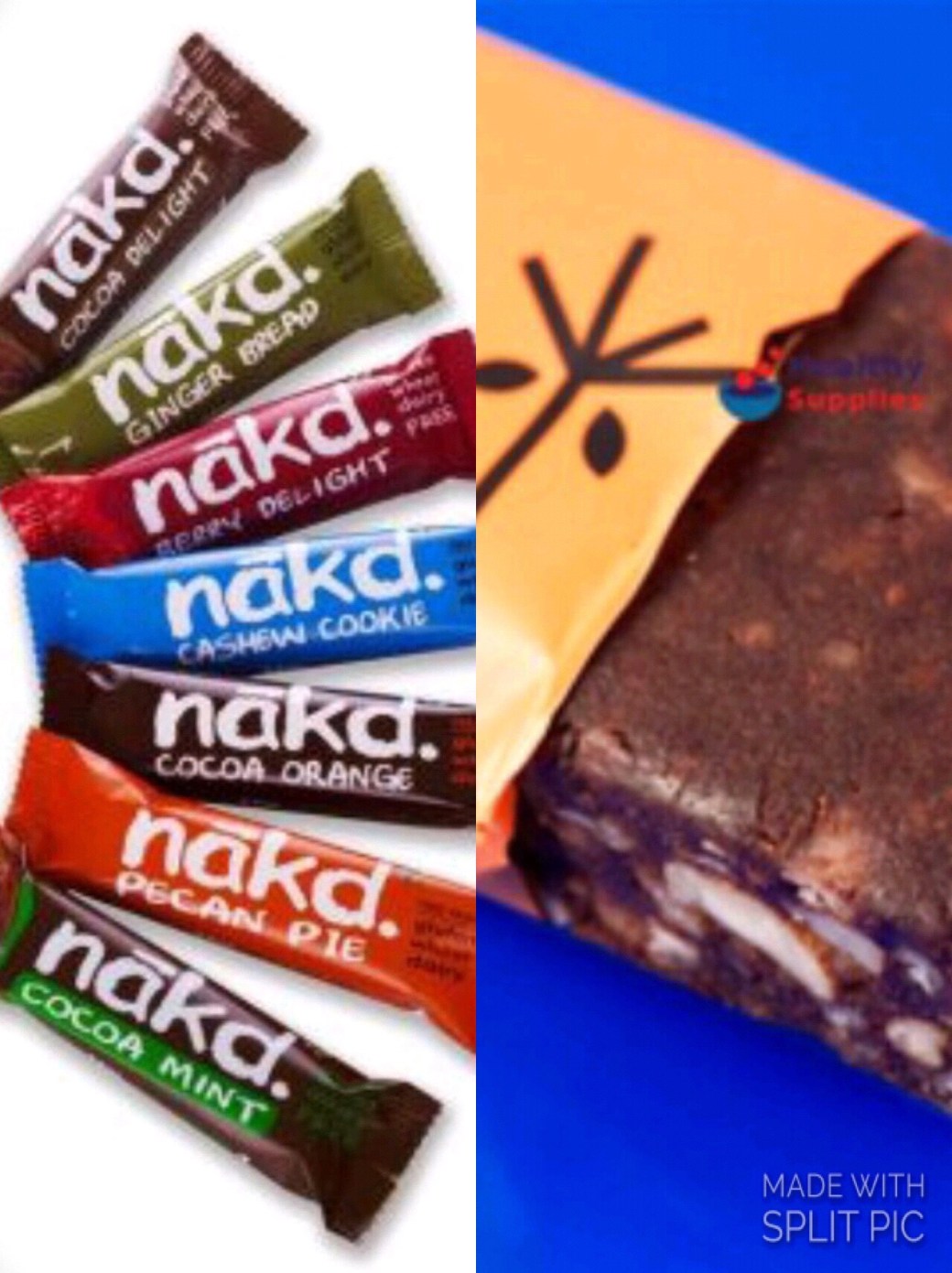
Nakd

First up we got Nakd bars. These little numbers are both pretty damn affordable and pretty damn tasty.

Natural balance foods, the creators of Nakd bars, state their bars are “completely different to other cereal bars because they’re made with a wholefood approach, which means that we believe in minimal processing and we don’t add any sugar, syrups or mysterious additives to your food.”

See the below list of Nakd products and their accompanying sugar content starting with the lowest content offering:

– 12 grams of sugar in 35g pecan pie nakd bar

– 12.4 grams of sugar in 35g ginger bread nakd bar

– 13.6 grams of sugar in 35g peanut delight nakd bar

– 13.6 grams of sugar in 35g cocoa orange nakd bar

– 13.7 grams of sugar in 35g cashew cookie nakd bar

– 14.3 grams of sugar in 35g apricot crunch nakd bar

– 15.6 grams of sugar in 35g carrot cake nakd bar

– 15.9 grams of sugar in 35g cocoa delight nakd bar

– 16 grams of sugar in 35g Bakewell tart nakd bar

– 16.6 grams of sugar in 35g berry delight nakd bar

– 16.7 grams of sugar in 35g cocoa coconut nakd bar

– 17.7 grams of sugar in 35g lemon drizzle nakd bar

– 18.2 grams of sugar in 35g blueberry muffin nakd bar

– 19.3 grams of sugar in 40g pack of coconut bliss nakd fruit & nut nibbles

– 20.2 grams of sugar in 40g pack of salted caramel nakd fruit & nut crunch nibbles

Planet Organic

Alrighty, next we have Planet Organic’s own range of grain free bars. Planet Organic is basically a paleo/vegan/nutrition bod’s wet dream. All the food sold there is in line with three key principles; organic (funnily enough), natural and sustainable.

– 7.8 grams of sugar in 30g Planet Organic Chia Vanilla Energise Bar

– 7.8 grams of sugar in 30g Planet Organic Chia Vanilla Energise Bar

– 8.4 grams of sugar in Planet Organic Cacao Brazil Nut Energise Bar

– 9 grams of sugar in 30g Planet Organic Goji Pumpkinseed Energise Bar

Primal Pantry

Right, next up Primal Pantry. These bars clearly align themselves to the paleo lifestyle. This can be seen with some great combinations including coconut and macadamia nuts (awesome omega 3 to 6 ratio) being a personal fave.

The Primal Pantry fames itself having been created by a qualified nutritionist. As their site states; “The award-winning Primal Pantry bars contain no added nasties or funky sounding names, just honest, simple ingredients that can be found in your own kitchen cupboard.”

We’ve got the standard and smaller version bars first, followed by the larger protein bars after:

– 14.9 grams sugar in 45g coconut & macadamia bar / 9.9 grams sugar in 30g bar

– 15 grams of sugar in 45g açai & super-seed bar

– 16.1 grams of sugar in 45g almond & cashew bar / 10. 7 grams of sugar in 30g bar

16.9 grams of sugar in 45g apple & pecan 45g bar /

– 17.1 grams of sugar in 45g brazil nut & cherry bar

– 17.5 grams of sugar in 45g hazelnut & cocoa bar / 11.7 grams of sugar in 30g bar

Primal Pantry Protein Bars

– 20 grams of sugar in 55g cocoa brownie hemp protein bar

– 21 grams of sugar in 55g cocoa orange hemp protein bar

– 21 grams of sugar in 55g double espresso hemp protein bar

– 22 grams of sugar in 55g mixed berry hemp protein bar

Dark Chocolate

Below are 3 bars that are pretty much widely available in most spots at the snack counter.

– 10.15 grams sugar in 70% 35g lint bar

( 29 grams in 100g lint bar )

– 10 grams of sugar in green & blacks organic 35g bar 70% ( 28.5 grams of sugar in 100g bar )

– 10.46 grams of sugar in 26g 72% willie’s cocoa Venezuelan bar

Conclusion

Right, so hopefully you’ve had a little scan through. Just to emphasise the point, and this is a big one; a quarter of a teaspoon of sugar equals one gram. So basically a full teaspoon equals 4 grams of sugar.

As can be seen, some of these bars have a pretty shockingly high sugar count, even some of the 35 gram bars, (although do bear in mind size differentiation). The Planet Organic hit some impressive low scores but again, size matters, they’re only 30grams a pop.

The dark chocolate has, as can be clearly seen, an impressive lower sugar content also. For those going low carb or keto, this makes it a clearly better choice. As already highlighted, there are a number of other benefits to consuming chocolate. Be weary though, these diminish with lower percentage cocoa bars and experts will argue that the nutritional value is negligible under 70% – 80% cocoa.

Timing

This is not to discount the value of the all natural ingredients in the bars we looked at. As with most things in life, timing is all important. Especially when looking to consume any particular carbohydrates or sugar.

So, if having a bar such as those discussed, the numero uno time would be post exercise. Although this may seem counter intuitive, as the treat will give the body calories and exercise will subsequently burn it off, it’s a tad more newonced than that.

This is primarily as your body is looking to replenish it’s depleted glycogen (energy) stores and is eager for them to be replenished. So in a nutshell your body is in the right metabolic state to use the carbohydrate and sugars being given to it.

A less optimal time to cram in on sugars and carbs, especially non complex carbs, would be the morning or evening, especially having completed no exercise prior. Adding any sugars first thing is a sure fire way to ensure blood sugar roller coasters and food cravings throughout the day.

So if you are looking to move away from sugar, which you damn well should be, start reading labels. Hope you’ve found this post interesting! If so, please like, share and leave a comment. Big love to you for reading.
What the experts say – the 2 minute read – nutritional choices for exercise recovery

Alrighty, welcome to the super sharp pro tips 2 minute read! As ever, these are some bite size morsels that come straight from the horses mouth,(so to speak).

Today’s pro tips are in regards to using a couple of nutrition hacks to get the best out of your recovery from exercise. We’ve got 3 lovely little tip bits for you today, so enjoy and go forth and improve your athletic performance!

The first two tips are from biohacker extrodinaire, Mr Ben Greenfield. I’ve spoken about him in the previous professional tips post so have a look for a tad more info. Saying that, here’s a pro tip via me; check his podcast series and interviews in Joe Rogan’s JRE podcast. Now.

1. Be mindful of the blunting hormone response post exercise of antioxidants, this is particularly true of high amounts of vitamin C or A. The antioxidant profile of coffee however is very similar to green tea polyphenols, which do not blunt the hormedic response to exercise! For instance, research shows coffee post workout enhances glycogen restoration into your body, if consuming a meal.

2. Needing recovery during the workout? You could do far worse than start swapping out your daily mineral water with Pellegrino sparkling water. This is a good source (and Pellegrino the highest source) or sodium bicarbonate, which buffers lactic acid build up during heavy workouts. Taking straight backing soda to achieve this often causes gut distress, so this is a good way to progressively load throughout the day prior to an evening workout.

Ok, last tip is from one of the sleep masters, mr Nick Littlehales. Nick is the leading elite sport sleep coach to the biggest names in the sporting world, including British Cycling and Team Sky’s recording-breaking cyclists, top Premiership and international football clubs, including doing extensive work with the treble winning 1999 Manchester Utd team.

Although we’ll revisit some sleep tips in a later post, try this for recovery;

1. Nick recommends in his excellent book Sleep, Montmorency tart cherries for recovery from exercise. They can also increase melatonin, the natural sleep hormone produced when you’re ready to nod off. Sleep is of course probably one of the single biggest factors to aiding recovery.

Alrighty, there we have it. 3 tips to nutritionally aid your recovery. Till next time.

The Vitamin Breakdown! – Vitamin B7

Welcome back to vitamin break down! This series looks to breakdown the vitamin alphabet to let you know exactly what, is doing what. We’ve been slowly marching our way through the B vitamins, which bring us nicely to our next breakdown.

Vitamin B7, more commonly known as biotin, or even less commonly; vitamin H, is a water-soluble nutrient. This means it passes through liquid in the body and can’t be stored in reserves such as fat soluble vitamins like vitamin A.

B7 is of course part of the B vitamin family. B vitamins help support adrenal function, calm and maintain a healthy nervous system, and are necessary for key metabolic processes in the body.

Enzymes & Coenzymes

Biotin is a coenzyme. Coenzymes are substances that enhance an enzyme’s action. Coenzymes cannot trigger or speed up a biological reaction, but they help enzymes do so. Enzymes are produced by all living organisms. They act as a catalyst to bring about a specific biochemical reaction, or help speed one up, within the human body. They bind to molecules and alter them in specific ways. They are essential for respiration, digesting food, muscle and nerve function, among thousands of other roles.

Metabolism

Biotin has vital metabolic functions. Without biotin as a co-factor, many enzymes do not work properly, and serious complications can occur, including varied diseases of the skin, intestinal tract, and nervous system.

B7 is crucial for the body’s metabolism of nutrients and as such, energy production. B7 as a coenzyme, transfers carbon dioxide, an important step in breaking down food. This role is essential for the metabolism of carbohydrate, fat, proteins and helps process glucose.

It plays a further key role in several other metabolic processes. It’s particularly important job is being involved in helping the body effectively process;

Fatty acids, a type of molecule found in fats and oils

Leucine, an essential amino acid that humans cannot synthesize

Gluconeogenesis, the synthesis of glucose from molecules that are not carbohydrates, for example, amino and fatty acids

Blood & Blood Sugars

B7 crucial for Haemostasis; the body’s normal physiological response for the prevention and stopping of bleeding/haemorrhage. It results in the blocking of any vascular breach. Generally speaking, it helps ensure blood fluidity and blood vessel integrity.

Biotin can help address high blood glucose levels, especially essential for people with type 2 diabetes. One study found that people with diabetes had lower levels of biotin than people without the condition. B7 may do this by aiding the body to process glucose through decreasing insulin resistance and improving glucose tolerance. In fact in rats, it has been found to stimulate the secretion of insulin.

Nervous System & Psychological Function

Diabetic neuropathy is a type of nerve damage that can occur if you have diabetes. High blood sugar/glucose can injure nerves throughout your body. Diabetic neuropathy most often damages nerves in your legs and feet. Some reports have suggested that biotin supplements can improve symptoms of neuropathy in people with diabetes. However, these have not been confirmed by research.

The brain is particularly sensitive to the delivery and metabolism of glucose. As B7 plays such a key role in glucose metabolism , there are clear ramifications for mental clarity, focus and general cognitive functioning.

Very high doses of biotin have been observed to possibly change the course of several rare neurodegenerative diseases. Researchers have tested whether there may be some benefit to treating MS with B7. The exact mechanism underlying neurodegeneration in MS is unknown. High doses of biotin may help in countering the loss of mitochondrial energy metabolism or help by stimulating the basic pathways for myelin formation via its effect as a coenzyme for the numerous carboxylases involved in both these processes.

Aesthetics

Biotin often gets pigeonholed as a beauty vitamin. It contributes to healthy nails, skin and hair, so it features in many cosmetic and health products for the skin and hair. It even supports maintaining mucous membranes and possibly helps prevent birth defects. However, it cannot be absorbed through hair or skin, so don’t be to fooled by product promises.

Sources & The Gut

The human body cannot create or synthesise biotin on its own. Only bacteria, molds, yeasts, algae, and certain plants can make it, so the diet needs to supply, and regularly at that. Hang on though, as it could be more a matter of feeding your symbiotic bacteria rather than cramming in biotin rich food.

Only small amounts of biotin are found in food sources such as brewer’s yeast, chicken, pork, egg yolks, leafy green vegetables, soybeans and bananas. There is however some good news as our clever native gut bacteria, or gut microbes/microbiome, are able to manufacture it, (phew!).

People who have taken a lot of antibiotics are also at risk of B7 deficiency, since antibiotics set off the equivalent to a nuclear explosion to your gut microbes that help generate it. If this is the case, seek to get lots of probiotic rich food such as anything fermented like sauerkraut, kimchi, komboocha or kefir.

These foods mentioned above should be sort regardless within your diet. Help to feed the new colonies probiotics bring by feeding them with plenty of prebiotic food also. I won’t go on to much but read more here about the importance of pre and pro biotic sources in your diet; http://whatsuppblogblog.com/2017/04/27/snack-hacks-5-prebiotics-vs-probiotics/

Fortunately, biotin deficiency is extremely rare. That said, as mentioned diabetics tend to have lower levels, and biotin supplements can be useful in managing glucose levels. Be aware that unused biotin is eliminated in urine and as the body does not build up reserves of B7, so to help generate it, support your gut health appropriately.

Right then. Thanks for reading! As ever, please give it a like and comment if you found the piece interesting or helpful in anyway! Till next time.

What the experts say – the 2 minute read – Choosing the best Extra Virgin Olive Oil & Mushrooms

And welcome back to the ‘what the experts say’ series! As before, this is a short little post with a couple of fact bombs from those in the know.

Right, today I’ve got two tip bits for you. The first is from Mr Max Lugavere. Max has written a quite excellent book called ‘Genius Foods’. This is packed full with how to protect and nurture the important bit in your swede.

The second tip comes from Tero Isokauppila. This famous Finn is the genius behind Four Stigmatic mushroom coffee. Depending on your choice, this stuff will switch you on like nothing else, keep you firing all day or put you out like a baby. What this dude don’t know about fungi, literally ain’t worth knowing.

Expert tip 1.

Oleocanthal is the phenol (plant compound) within extra virgin olive oil that does incredibly good things for your brain such as reducing low level inflammation. Oleocanthal gives a peppery taste, the stronger the taste, the stronger the health effects. Therefore you should literally cough on good extra virgin olive oil if sampling before you buy.

On a side note for purchasing good extra virgin olive oil by the way, (and this isn’t via Max), look to purchase oil in a dark bottle, from a single origin and with a ‘bottled on’ date. Oh yeah, and store in a dark cupboard.

Expert tip 2.

Mushrooms act like parasites, (don’t be put off!), and as such need things to eat to live, like animals and humans do. This is opposed to plants which use photosynthesis to create energy and grow.

Mushrooms exist symbiotically when growing. They can eat organic or non organic material they come into contact with and act like cleaners of the forrest. For example oyster mushrooms can clean up oil, one species found in the amazon can feed on plastic and others even feed on radiation!

For this reason it’s important to know where your mushrooms have come from, and even more so, to ensure your eating organic. This is as mushrooms will feed on pesticides and unknowingly, could well pass them on to you. Buy organic!