Snack Hack # 10 – Kefir – Fermented food for your gut

Welcome back to the What Supp Blog’s snack hack series. These are a simple collection of actionable tips, tricks and hacks to get the most out of your biological make up.

Today’s subject matter is a tasty one, Kefir. Kefir is one of those products that’s slowly making its way into the mainstream. This is for good reason as it holds some real health benefits and can be made simply at home as well as purchased from your local health food provider.

Kefir is a fermented milk product that comes from the Caucasus Mountains in Eastern Europe. It is popular Eastern Europe, Russia and Southwest Asia. The drink itself is the result of the milk being cultured from kefir “grains.” These are not grains in the conventional sense, (fear not paleo and gluten free enthusiasts), but gelatinous white or yellow particles that are actually living cultures, formed from yeast and lactic acid bacteria. They look like pieces of coral or small clumps of cauliflower and range from the size of a grain of wheat to that of a hazelnut.

The fact kefir colonizes as it does is unique, as no other milk culture forms grains. These grains contain the bacteria/yeast mixture clumped together with casein (milk proteins) and complex sugars. The grains metabolize the nutrients in the milk – the lactose and some fatty acids – and in-turn produce carbon dioxide, lactic acid, and small amounts of a host of other compounds, including ethanol. These benign microorganisms out-compete and actually fend-off pathogenic bacteria, thus preserving the milk without refrigeration.  

The kefir grains ferment the milk, incorporating their friendly organisms to create the cultured product. The grains are then removed with a strainer before consumption of the kefir and added to a new batch of milk. Kefir can be made from any type of milk, cow, goat or sheep, coconut, rice or soy. Although it is slightly mucous forming, the mucous has a “clean” quality to it that creates ideal conditions in the digestive tract for the colonization of friendly bacteria.

For the lactose intolerant, kefir’s abundance of beneficial yeast and bacteria provide lactase, an enzyme that consumes most of the lactose left after the culturing process. Some lactose may remain in trace form however so do proceed with some caution.

Health

Ok, so we’ve looked at what Kefir is and how it is formed. This still however begs the question, why supplement Kefir into your diet? Kefir is unique due to it containing both bacteria and yeast, and because the grains are re-used again and again with each new batch. This process only adds to the health improving potency of it. This is unlike similar dairy products such as yogurt, which only contains bacteria.  

Similar to other fermented foods, kefir is considered to be both a probiotic and prebiotic. Probiotics are microorganisms that can help with digestion and may offer protection from harmful bacteria. Prebiotics are carbohydrates that probiotics use as fuel. Kefir has both of these in abundance as well as containing calcium, protein and B-vitamins. Kefir also contains about 30 different microorganisms, making it a much more potent source of probiotics than other fermented dairy products.

I wont go on and on to much about probiotics and prebiotics in this post but will highlight that they are essential to gut health. Gut health in turn as been evidenced to have a direct link with everything from energy levels and immune system to hormone functioning and mental health. You can read more about them and where to get them in this post;  http://whatsuppblogblog.com/2017/04/27/snack-hacks-5-prebiotics-vs-probiotics/)

As previously mentioned, the grains for kefir can be purchased and it can be cultured at home. Should you choose to do so, here’s a quick how too;

(Note; if grains are new and not activated, either follow instructions with grains or see instructions here; https://www.culturesforhealth.com/media/docs/Milk_Kefir_Instructions.pdf)

Method

1. Transfer the active kefir grains into up to 4 cups of fresh milk.

2. Cover with a coffee filter or butter muslin secured by a rubber band or jar ring.

3. Place in a warm spot, 68°-85°F, to culture.

4. Culture until milk is slightly thickened and aroma is pleasant. This generally takes 24 hours, but can take less time in warmer temperatures, so keep an eye on your grains.

5. After the milk changes texture and culturing is complete, separate the kefir grains from the finished kefir.

6. Place the kefir grains in a new batch of milk. Store the finished kefir in the refrigerator.

Be aware that double fermentation, the sieving of the kefir drink produced from the grains and then left to ferment alone again for 24 hours, can further reduce lactose and increase both b vitamins and probiotics further. 

Thank you for joining me once again. I hope this post has been informative and as ever, if you’ve enjoyed, please leave a comment and share. Till next time.  

Cheap Eat Nutrition # 19 – low carb/paleo/keto/gluten free and affordably inspired – Hot & Sticky Chicken Wings

Welcome to cheap eat nutrition recipe ideas! These are affordable nutritious recipes that are grain & gluten free, healthy for the gut microbes and contain a healthy dose of fat. You can find various cheap eat dishes and ideas on the Instagram page; @cheap.eat.nutrition . 

So today’s recipe is for spicy sticky chicken wings. As all will know, buying organic free range meat & poultry is expensive, chicken wings are however an affordable addition as opposed to the more popular breast meat. They have the additional nutritional extra of the skins, (providing a healthy source of fat and collagen) as well as being left with bones that can be put towards a nutritious bone broth, (see previous post for recipe and info http://whatsuppblogblog.com/2016/10/29/whats-the-fuss-about-bone-broth/ )

Ingredients:

(Serves 2)

– 1 pack of chicken wings

– 1 tsp ginger

– 1 tsp chilli flakes 

– 1 tsp paprika 

– 1 heaped tble spoon of coconut oil 

Method:

– Place coconut oil in pan and heat on low setting until liquid

– Add spices and stir together combining ingredients into a glaze

– Place chicken wings in heat proof dish drizzle glaze over wings 

– Massage glaze into individual chicken wings

– If time allows, cover wings and place wings in fridge to marinate for a few hours 

– Place wings in oven at 180 Celsius and cook for 20/25 mins

– Allow to cool for 5 mins, serve and enjoy! 

The Nutritional Benefits of Organ Meats 

Welcome back the What Supp Blog, your first stop for nutrition, supplementation and biohacking. Today’s topic is going to be one for the carnivores amongst us. This post is going to have a dive into the nutritional benefits of organ meats and explain why you should include them in your diet.

Organ meats, or Offal as they are also commonly known, refers to the internal organs and entrails of a butchered animal. The word does not refer to a particular list of edible organs, which varies by culture and region, but includes most internal organs excluding the muscle and bone of the animal. Now I know this description, for me anyway, does sound a tad grim. However in many countries and cultures using organ meats is not just standard business, their often considered a delicacy.

In nature there’s a reason that upon catching their pray, most predators will go directly for the liver and kidneys prior to the flesh. Organ meats are the most concentrated source of just about every nutrient, including important vitamins, minerals, healthy fats and essential amino acids. 

Compared to the muscle meat we are used to eating, organ meats are more densely packed with just about every nutrient, including heavy doses of B vitamins such as: B1, B2, B6, folic acid and the important vitamin B12.  

Organ meats are also loaded with minerals like phosphorus, iron, copper, magnesium, iodine, calcium, potassium, sodium, selenium, zinc and manganese and provide the important fat-soluble vitamins A, D, E and K. Organ meats are known to have some of the highest concentrations of naturally occurring vitamin D of any food source. Organ meats also contain high amounts of essential fatty acids, including arachidonic acid and the omega-3 fats EPA and DHA which are essential for optimum brain health and function.

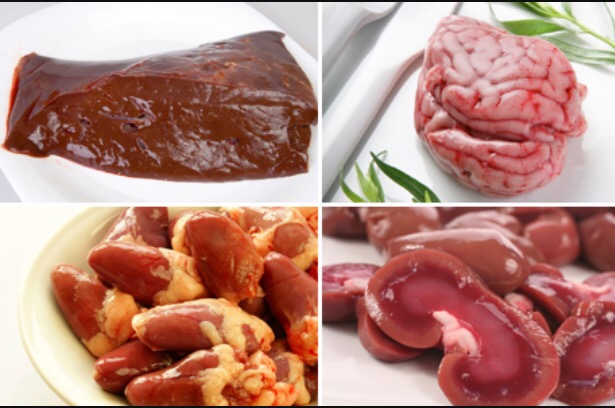
Although there are plenty or organ meats to choose from, I’d probably suggest starting with the three organ staples: liver, kidney and heart. Below I’ll present a quick summary of nutrient density for each one of these meats. 

Liver

Per 68-gram serving of beef liver (approximately one 2.5-inch by 2.5-inch slice)

Fat: 4g

Protein: 20g

Calories: 130

One of the most common organs, liver is a great source of high quality protein and is one of the most concentrated sources of vitamin A, along with copper, folic acid and iron. It also contains Coenzyme Q10 (CoQ10), which is important for cardiovascular functions. Athletes love liver because it improves the oxygen-carrying capacity of blood cells, increasing endurance and strength and fighting fatigue, while its B vitamins can also aid those suffering with Alzheimer’s and other forms of dementia.
Note

Liver can retain toxins from drugs and other chemicals, so buy grass-fed & organic meat where possible as it will be without added antibiotics or hormones

Kidneys 

Per 4-oz. serving of beef liver (approximately one 4-inch by 4-inch slice)

Calories: 116

Fat: 3g

Protein: 20g

If you’re looking for a way to get lots of protein without lots of fat, opt for kidneys, which contain a shedload of B12, riboflavin and iron, as well as healthy amounts of B6, folate and niacin.

Two of the key components in kidneys are vitamin B12 and folate. These two perform several important functions in the body, including keeping the nervous system healthy. A deficiency in either of these vitamins can cause a wide range of problems, from lack of energy, muscle weakness to poor memory and even depression. 

Heart

Per 4-oz. serving of beef heart (approximately one 4-inch by 4-inch slice)

Calories: 127

Fat: 4g

Protein: 20g

Since it’s a muscle, heart shares many similarities with steak, roasts and ground beef, is less expensive (funnily enough) and has a higher amount of protein, thiamine, folate, selenium, phosphorus, zinc, CoQ10 and several B vitamins. It’s a great way to rack up amino acids that can improve metabolism and compounds that aid the production of collagen and elastin, which ensures skin elasticity, joint repair and combats many signs of ageing. This mixture of unique nutrients helps build muscle, store energy and boost stamina and endurance.

Ok, so there’s a look at just some of the benefits of what organ meats can do for you and why they’re worth incorporating into your diet. So, below is a quick and simple liver recipe that can be completed from start to finish in 25 minutes and is a delicious option to start you off! 

Recipe 
Liver & Onions

Ingredients:

– Lamb (optional) liver 
– 1 large Onion 
– 3 cloves of Garlic 
– 1 tsp of rosemary 
– 1 tsp oregano
– 1 chicken stock cube
– 275ml of boiling water
– 1 tsp of butter 

Method:

– Chop liver and onions into rough slices. Place to one side. 
– Finely chop Garlic cloves. Place to one side. 
– Heat butter in medium frying pan on low to medium heat.
– Add liver & onions, cooking till liver changes colour and onions are translucent. 
– Add spices and garlic, mixing thoroughly. 
– Add stock cube to boiling water, mixing till dissolved. Now add stock to liver & onions.
– Place on low heat and allow to simmer for 15 minutes.
– Serve with roasted or mashed root veg. 

Hope you enjoyed this blog post! Please leave a comment and check out the Facebook page, Instagram and Twitter pages for more great information on health, nutrition, biohacking and more! 

Cheap Eat Nutrition # 18 – low carb/paleo/keto/gluten free and affordably inspired – Coconut milk & Cocoa nib Chia seed pot


Cheap, nutritious and simple, welcome to the cheap eat nutrition recipe collection. Named after the popular Instagram page, these recipes aim to bring you a selection of delicious food options minus the excess sugar, processed carbohydrates and industrial seed oils. 

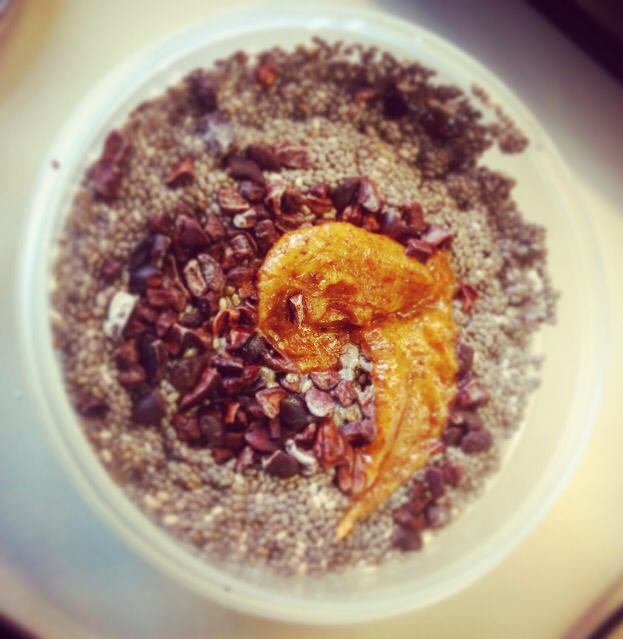
Today we’ve got a really simple snack for you that can be customised to your individual liking. The Chia seed pot with coconut milk.

Chia seeds are a great source of polyunsaturated fat, particularly the omega 3 fatty acid, alpha linolenic acid (ALA). There is also a good fibre content. 

Please be mindful that the jury on chia seeds as a staple in the diet is still out. There are a huge amount of nutrients which I haven’t mentioned that are contained within them. 

However, there is some research that points to chia seeds having a high concentration of anti nutrients which essentially effects the body’s absorption of much of the nutrient content. One study did suggest that a 50g a day portion of chia seeds over a 12 week period raised bio markers of inflammation in the body. In conclusion though, this is still a solid snack that will deliver a low carb and healthy fat punch. Just don’t become over reliant on chia seeds for your omega 3 intake. 

Ingredients:

– 4 tble spns of Chia Seeds
– coconut milk (enough to cover the seeds by two thirds)
– 1 tble spoon of cocoa nibs
– 1 – 2 heaped tsps of almond butter (option)

Method:
– Place seeds in a small, preferably sealable pot. Alternatively, a kitchen or jam jar
– Cover the seeds with the coconut milk and stir thoroughly until all the seeds are mixed separately
– Cover and leave in fridge over night
– Stir in cocoa nibs and almond butter. Relax and enjoy!